Farm-to-Table With Global Accents
Passerine
Imagine going to bed one night and questioning whether your restaurant will succeed, only to wake up the next morning to find your phone is blowing up with texts and emails congratulating you for being named to the “50 Favorite Restaurants” list by The New York Times. Kyle Sollenberger, the co-owner of Passerine, experienced such a scenario two years ago.

“We had no idea that was coming,” he says of being named to “the list.” Oddly enough, he does follow the Times’ food blogger/writer Nikita Richardson’s Instagram account. “One day I was looking at it and noticed a picture that looked familiar,” he says of the post that was dated July 24, Lancaster, PA. A little later, he received a media request for pictures from the Times. He sent them “and heard nothing,” admitting, “I was a little disheartened.”
When “the list” was revealed in mid-September (2024), Passerine was complimented for “quietly serving outstanding dishes made with the bounty of the surrounding farmland and accented by global sensibilities.”
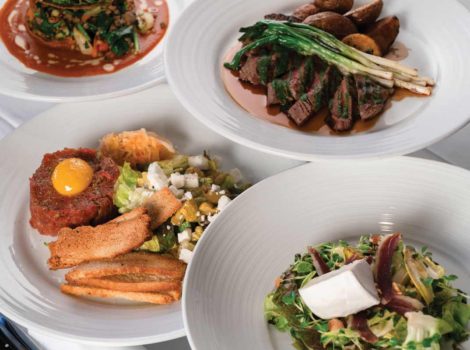
Indeed, Passerine has managed to carve out a niche in a city that is brimming with restaurants. “Lancaster has become a world-class destination,” he says of the attention that is being paid to the culturally diverse restaurants and the farm-to-table philosophy that keeps menus evolving. Passerine has managed to put the two together and offer guests a small but adventurous menu that infuses farm-to-table with global influences.
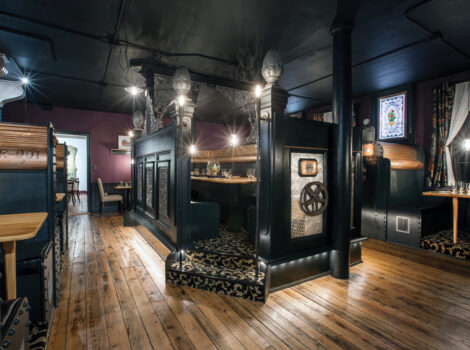
Kyle, who partnered on the project with Dr. Jonathan Shirey, was drawn to the character of the historic building that houses Passerine, as well as the cozy indoor spaces it offers. (A new outdoor dining area debuted this spring.) “It’s a great location,” he says of its proximity to Gallery Row and downtown.

Kyle had his own ideas about how the restaurant would look and function. Primarily, it would complement his love of food, which, he says, includes anything from mom-and-pop fare to a Michelin-starred restaurant in Paris. It would also allow him to change up the concept of a restaurant by selling cookbooks (curated by his wife, Jessica) and operating a bottle shop that specializes in regional wines. (His criteria for the selections focus on small, interesting wineries that emphasize sustainability.) “I don’t care if someone comes in and buys a bottle of wine to take to a BYOB restaurant,” he says. “It gets them in the door.”
Finally, owning a restaurant would allow him to design a concept that combines his love of international cuisine with the bounty of Lancaster County. Passerine’s menu is ever evolving, reflecting the hyper-local direction that keeps customers returning. “We refer to our menu as ‘New American,’” he explains, pointing out that it is influenced by French cooking but leans eclectic, as it’s driven by what is available. That sense of dining at a countryside inn in France, or even a farmhouse kitchen in Lancaster County, is reflected in the fact that no two dinner plates are the same. Sourcing vintage dinnerware is a team effort. “It’s a job in itself,” he laughs. “I’m always searching. It’s good I thrive under pressure!”

The farm-to-table concept also provided Kyle with a way to honor the restaurant’s farm partners by providing them with opportunities to interact with guests during special “educational” dinners. “We hold the dinners quarterly and they always sell out,” he reports. The educational aspect also appeals to Kevin Venbrux, Passerine’s executive chef, who says there’s nothing he enjoys more than talking to and learning from farmers, notably Alex Wenger of Field’s Edge Research Farm in Lititz. “There’s nothing quite like eating veggies right out of the ground!” he says. He also loves the flexibility that being hyper-local offers. “I can change things on the fly,” he notes.

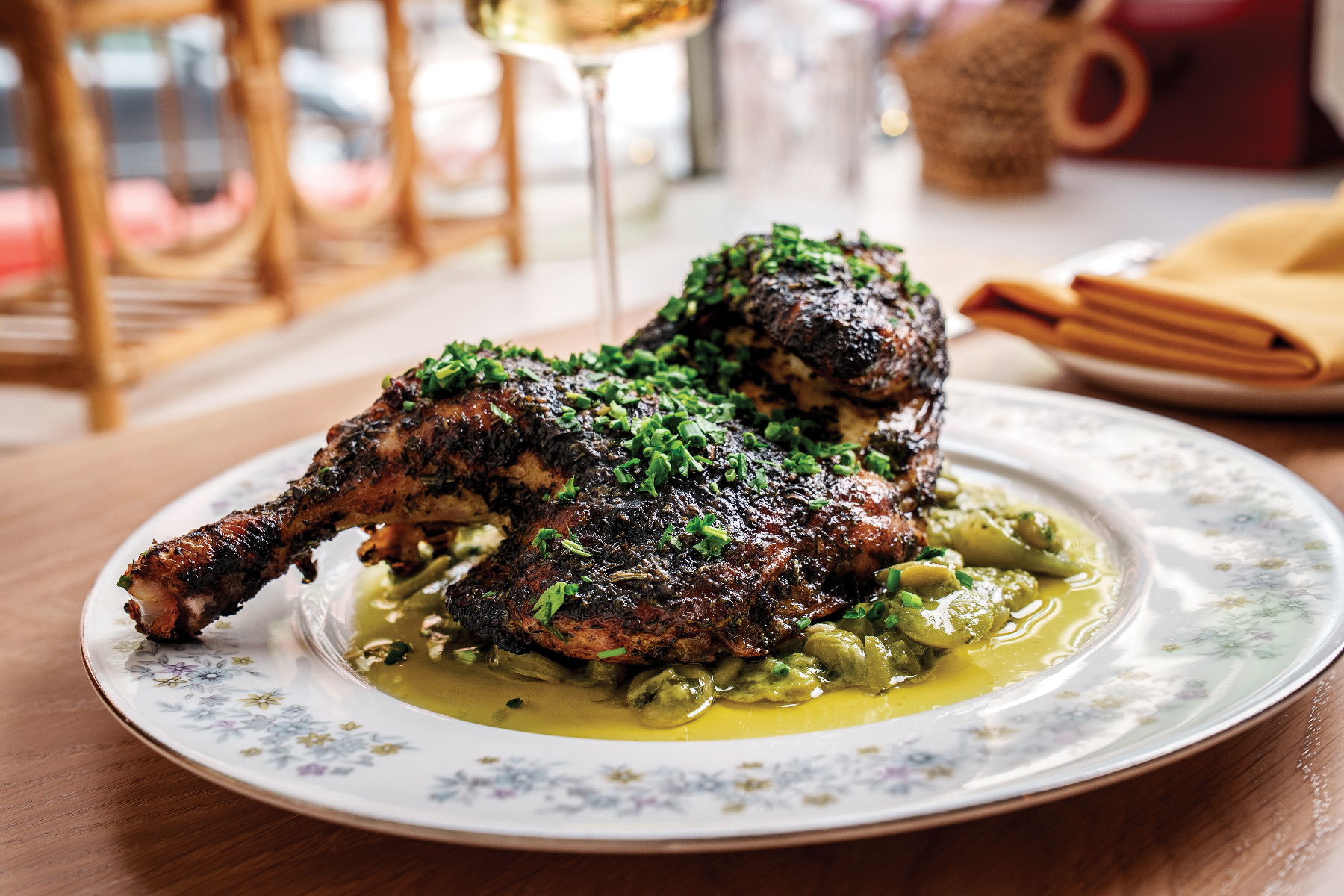
Passerine’s Michelle Malec tells a story that drives home the fact that food truly possesses the power to touch our emotions. One woman approached her in tears, sharing that Passerine’s chicken dish reminded her of childhood dinners at her grandmother’s house. Part of the response may have been due to the fact that Passerine sources its chicken from Breakaway Farms and Butchery in Mount Joy, where owner Nate Thomas and his staff share a “strong passion for saving old farms, producing highly nutritious food, and communing with others around the table.” The farm raises heritage breeds of cattle, pigs, sheep, chickens and turkeys. “We’re currently buying our whole chickens from Breakaway Farms,” notes Kyle, who verifies “they’re delicious!”
114 North Prince Street, Lancaster
Hours: Monday, Thursday and Friday, 5-10 p.m. (kitchen closes at 9 p.m.). Saturday, 10 a.m.-10 p.m. (kitchen closes 2-4 p.m. and 9 p.m.). Sunday, 10 a.m.-3 p.m. (kitchen closes at 2 p.m.).
Information: Cafepasserine.com
Historical Tidbits
Americans love chicken! According to the National Chicken Council, the average American consumes 96 pounds per year, making it the most popular meat source. Chicken as a food source can be traced back 5,000 years to Asia, when the Red Junglefowl of Vietnam, Thailand and Myanmar was domesticated. Initially, the chickens were valued for their eggs (and, unfortunately their cockfighting prowess). They later became a source of meat.
Trade routes carried them to all points of the globe. The Egyptians even developed an incubation process for eggs. The Romans bred chickens, keeping detailed logs of their birds. Later, the Spanish and Portuguese would introduce chickens to the New World. Chicken farming greatly expanded during the Middle Ages due to the growth of the feudal system, as well as farms maintained by monasteries.
Chickens came to be revered and represented everything from wealth and prosperity to protection. They also symbolized fertility. The bones of chickens have been found in Egyptian tombs. They were also used in religious ceremonies and were even relied upon to predict the future.
By the 19th century, advances in breeding and other aspects of raising chickens made them accessible and affordable. Backyard flocks gave way to the development of production farms in such states as Delaware, Maryland and Georgia, where broilers, which were raised specifically for meat purposes, revolutionized the industry in the 1920s.
Interestingly, backyard flocks are once again in vogue, as many foodies and hobbyists raise their owns chickens. Free-range is also a buzzword and Lancaster County’s Plain farmers have become pros at supplying upscale restaurants in New York, Philadelphia, Baltimore and Washington with their home-grown products.